A review of SRIAs filed in California
For the Energy Commission’s SRIA program, a commissioned review of the SRIAs agencies had submitted: how the analyses were built, and where they diverged in method and quality.

PracticeRegulatory impact (SRIA)
Nine of the Standardized Regulatory Impact Assessments on the Department of Finance’s major regulations record since 2016 were prepared by BEAR or its team, for six state agencies. Each was estimated with the BEAR model on a baseline calibrated to the DOF forecast and carried through DOF review and comment. Further SRIAs for state agencies are under way.
Past performance in a state solicitation is checkable, so the record states the contracting entity for each engagement and links to the public document where the agency has posted one.
Scroll the table sideways to see all columns
| Agency | Regulation | Year | Contracted through |
|---|---|---|---|
| CPPA | CCPA updates, cybersecurity audits, risk assessments, automated decisionmaking | 2024 | BEAR LLC |
| DOJ / Gambling Control | Cardroom player-dealer rotation and blackjack | 2024 | BEAR LLC |
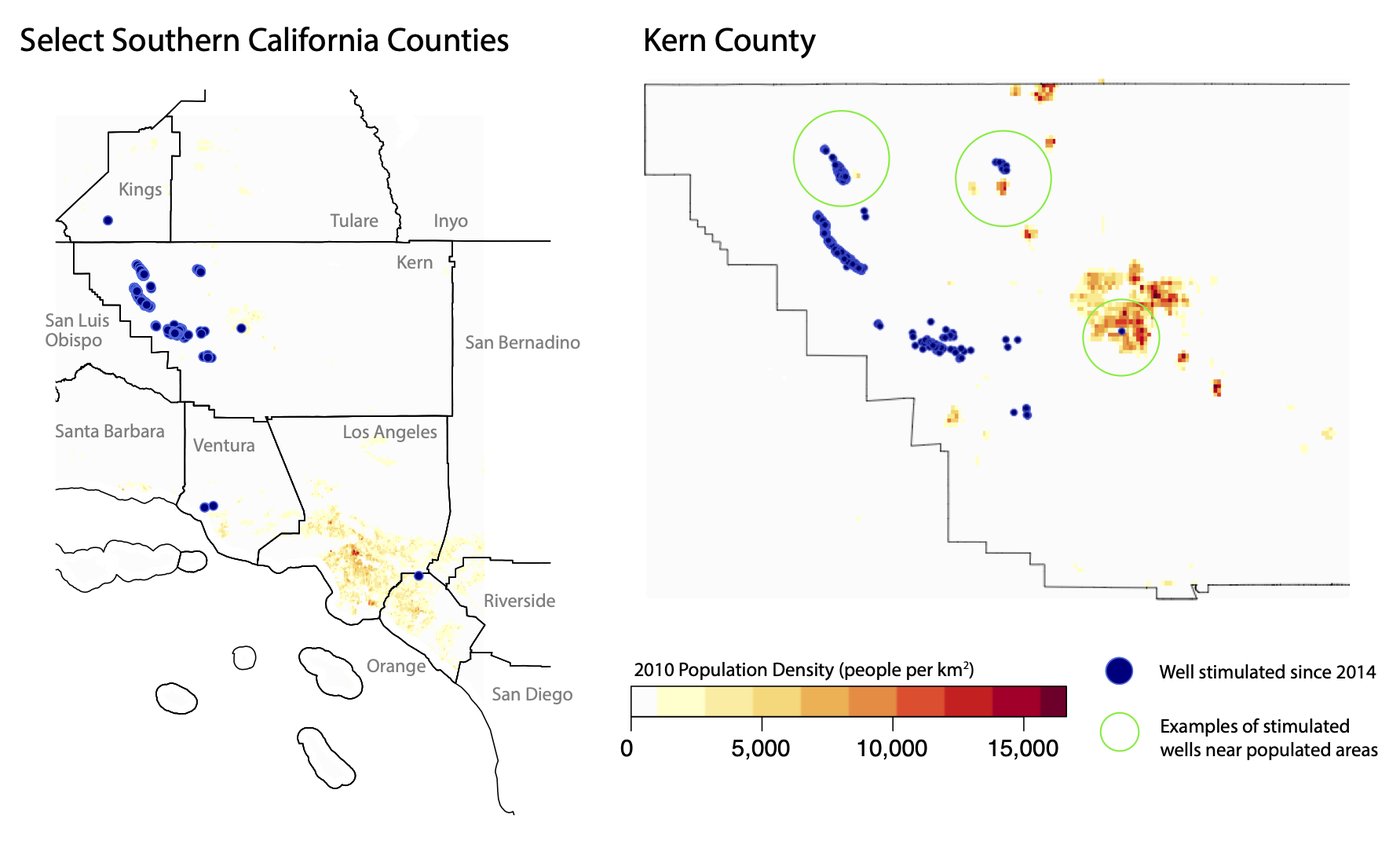
| CalGEM | Well stimulation treatment permitting phase-out | 2023 | BEAR LLC |
| CHP | Electronic logging devices for intrastate carriers | 2022 | BEAR LLC |
| DOJ | California Consumer Privacy Act regulations, first rulemaking | 2019 | BEAR LLC |
| DIR / Cal-OSHA | Occupational lead standards (revised 2020) | 2019 | BEAR LLC |
| DIR / Cal-OSHA | Residential fall protection | 2019 | BEAR LLC |
| DIR / Cal-OSHA | Elevator Safety Orders, Title 8 | 2017 | UC Berkeley |
| CEC | Appliance efficiency: computers, monitors and signage displays | 2016 | UC Berkeley |
One team, one model, one continuous record. The engagements above were led by the same principal investigator with the same modeling team throughout. Before Berkeley Economic Advising and Research took on state contracts directly, that work was contracted through UC Berkeley; the column records the contracting party of record so past performance can be verified, not a change of team.
For the Energy Commission’s SRIA program, a commissioned review of the SRIAs agencies had submitted: how the analyses were built, and where they diverged in method and quality.
The guidance the Energy Commission uses to scope and structure its regulatory impact assessments.
The same efficiency rule run through REMI PI+, IMPLAN, RIMS II and the BEAR model, with the REMI and BEAR baselines compared for 2015 to 2030.
Assessments are built on a baseline calibrated to Department of Finance projections, so the reviewing analyst is not reconciling two pictures of the California economy.
An agency rarely needs only a number. It needs a document that survives Department of Finance review and can be explained to stakeholders at hearing.
Determine whether the proposed regulation crosses the $50 million major-regulation threshold and therefore needs a SRIA at all. A short, early answer that protects the rulemaking calendar.
Define the affected sectors, the alternatives to be tested, and a baseline calibrated to Department of Finance projections against which everything is measured.
Run the regulation and its alternatives through the BEAR model: direct compliance costs, then output, employment, income distribution and state and local fiscal effects over the analysis horizon.
Prepare the submission and the Form 399 economic and fiscal impact attachments, then answer DOF’s comments and revise.
Plain-language materials, workshop and hearing support, and responses to public comment on the economic analysis.
When the agency estimates the regulation’s economic impact will exceed $50 million in any 12-month period between adoption and full implementation (Government Code section 11342.548). The SRIA goes to the Department of Finance for review before the notice of proposed action is published.
Often, yes. BEAR is a California certified Small Business (Micro), so a single-regulation SRIA under $250,000 can be awarded through the SB/DVBE Option with two quotes. Details.
Yes. BEAR has prepared the Form 399 economic notes alongside its SRIAs, including for the California Privacy Protection Agency in 2022.
The documents an evaluator would want first. All are public.
California certified Small Business (Micro), no. 2026547. BEAR can provide a capability statement, the record above with contracting entity for each engagement, and references.