
PracticeMajor events and local revenue
What a mega-event or a new tax actually brings a city.
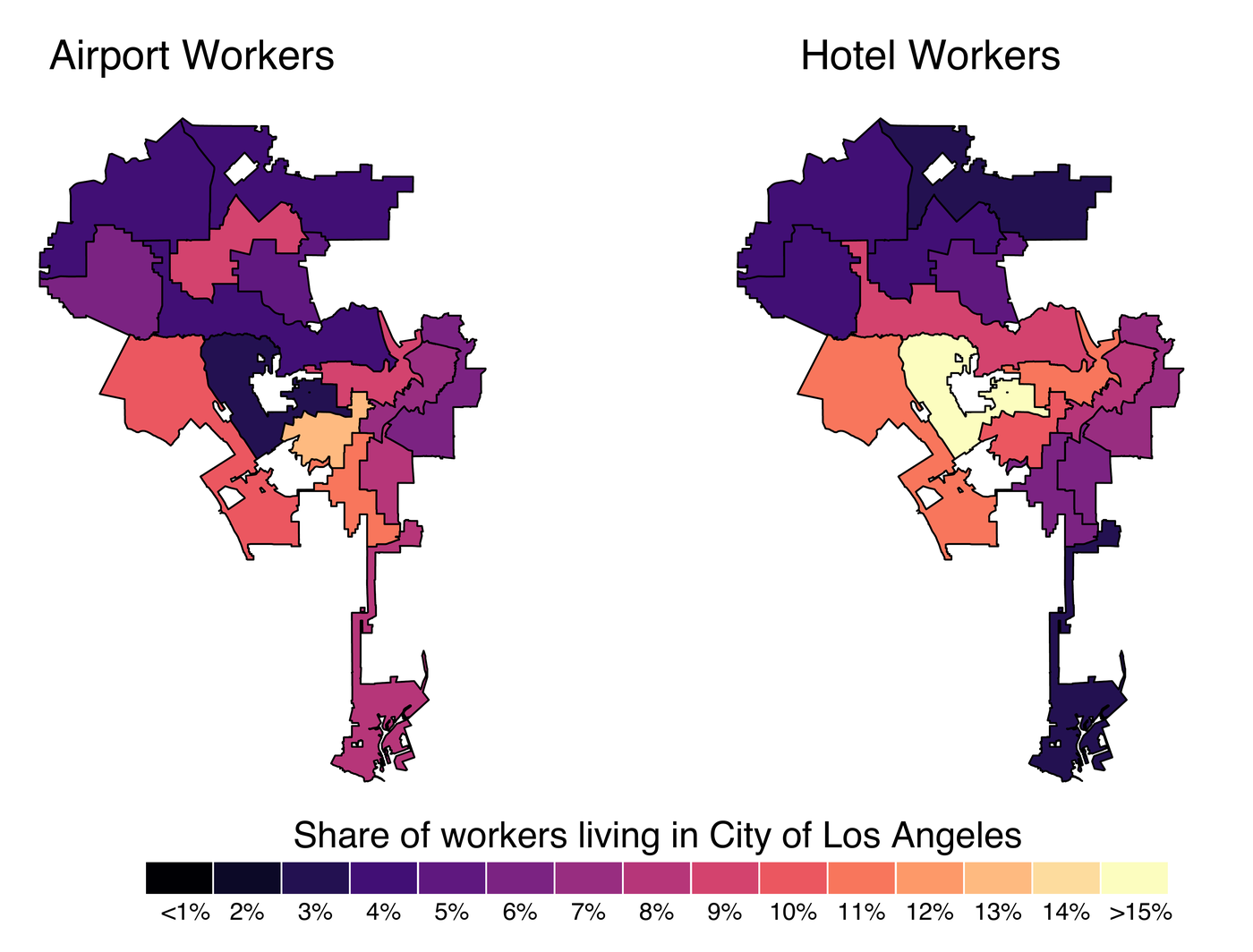
The 2026 World Cup and the 2028 Olympic and Paralympic Games put hotels, airports, venues and their workers at the center of city budgets. BEAR’s Los Angeles work already maps that economy: where the hotels are, where their workers live, and how a policy change moves through payroll, prices and local revenue.
The record
Write-ups with the client, the year, the headline result and the public document.
| Client | Engagement | Year | Headline result |
|---|---|---|---|
| City of Los Angeles | City of Los Angeles: hotel and airport worker wages | 2024 | 23,000 Workers directly and indirectly affected |
The visitor economy, at the scale it operates
Event studies usually multiply visitor counts by a spending average. BEAR starts from the places and people that carry the event: the hotel and venue inventory, the workforce and where it commutes from, and the local taxes each transaction pays. The result shows which neighborhoods and which revenue lines move, and by how much, with the assumptions stated.
Can you estimate revenue from a tax that does not exist yet?
Yes. A feasibility study builds the base from the establishments and transactions the tax would reach, then tests rates and exemptions against it.
Do you deliver a tool, or only a report?
Both are possible. The Los Angeles study produced an interactive map of hotels alongside the report.
Do you work for cities outside Los Angeles?
Yes. Culver City commissioned BEAR in 2023, and BEAR works regionally for the Southern California Association of Governments.
Preparing a budget for 2026 or 2028?
Write with the event, the revenue question and the timeline.