The question
What would the tighter standard cost California employers, and what would workers gain in health?
What BEAR found
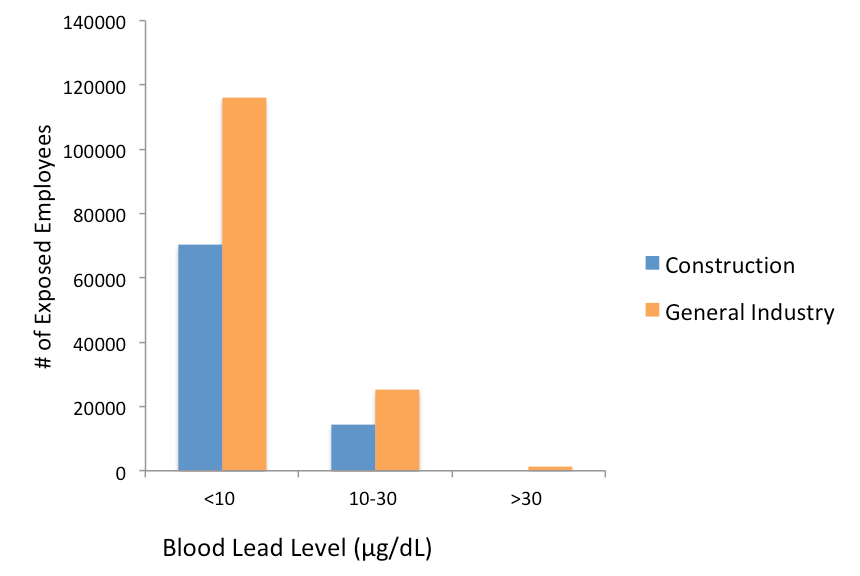
About 228,000 California employees are exposed to lead at work: 85,000 in construction and 143,000 in general industry. Direct compliance costs are $248.4 million in the first year and $195.4 million a year after that. Health benefits start at $27.9 million and rise to $1.26 billion a year.
Real gross state product is $0.42 billion below baseline in 2020 but $2.40 billion above it in 2030, with 3,080 more full-time jobs in 2030.
Method
The BEAR dynamic CGE model (60 sectors on 2015 IMPLAN data), run over 2016 to 2030 against the Department of Finance’s June 2017 conforming forecast, using compliance costs by six-digit NAICS industry and avoided health spending derived from blood-lead exposure modeling.
Team
David Roland-Holst, Samuel Evans and Samuel Neal.
Public record
- Revised SRIA, August 2020 (PDF)Department of Finance major regulations table
- Original SRIA, 2019 (PDF)Submitted May 13, 2019
- Department of Finance comment letter (PDF)June 12, 2019
- Standards Board rulemaking pagedir.ca.gov
How to cite
Roland-Holst, D., Evans, S., and Neal, S. (2019, revised 2020). Standardized Regulatory Impact Assessment: Revisions to Occupational Lead Standards. Berkeley Economic Advising and Research. Prepared for the California Department of Industrial Relations.