The question
What do California’s long-term energy and climate scenarios to 2050 mean for incomes, jobs and public health, statewide and in disadvantaged communities, at census-tract resolution?
What BEAR found
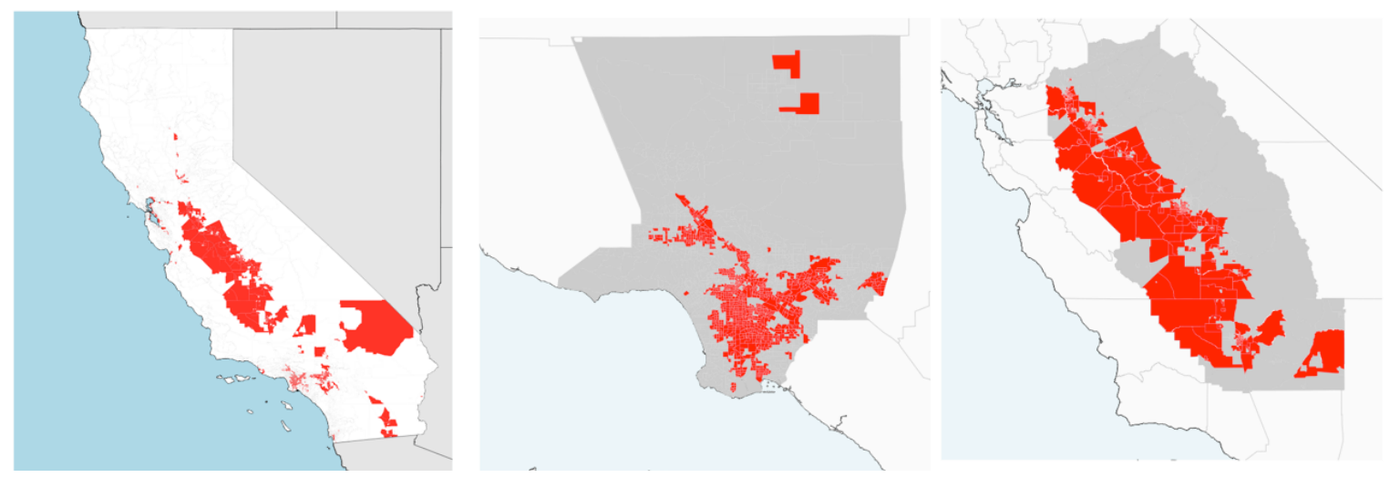
Lasting low-carbon investment could raise real gross state product 2 percent by 2030 and 9 percent by 2050, and create more than 500,000 additional full-time jobs by 2030 and 3.3 million by 2050, with employment forecast for each of the state’s 8,000 census tracts and 2,000 disadvantaged communities.
Disadvantaged communities, a quarter of the population, capture about 30 percent of new jobs by 2030 (170,000 against 406,000 elsewhere) and larger health benefits per household ($581 against $494).
Method
The BEAR dynamic CGE forecasting model, fed with E3’s energy-system cost and technology scenarios, with health co-benefits estimated from evidence linking pollution and mortality, and results downscaled to census tracts and CalEnviroScreen disadvantaged communities.
Team
David Roland-Holst, Samuel Evans, Sam Heft-Neal, Drew Behnke and Myung Lucy Shim.
Public record
- Exploring Economic Impacts in Long-Term California Energy Scenarios (PDF)CEC-500-2018-013, docket 18-IEPR-09
- Docket 18-IEPR-09California Energy Commission
- Final report as hosted by BEAR (PDF)bearecon.com
How to cite
Roland-Holst, D., Evans, S., Heft-Neal, S., Behnke, D., and Shim, M. L. (2018). Exploring Economic Impacts in Long-Term California Energy Scenarios. California Energy Commission. Publication Number CEC-500-2018-013.