The question
How would a regional, multistate grid operator affect California jobs, incomes and disadvantaged communities, compared with current practice under a 50 percent renewables standard?
What BEAR found
Against a reference that holds the renewables standard at 33 percent, reaching 50 percent by 2030 adds an estimated 90,000 to 110,000 jobs statewide in 2030 and $11.3 to $13 billion in gross state product.
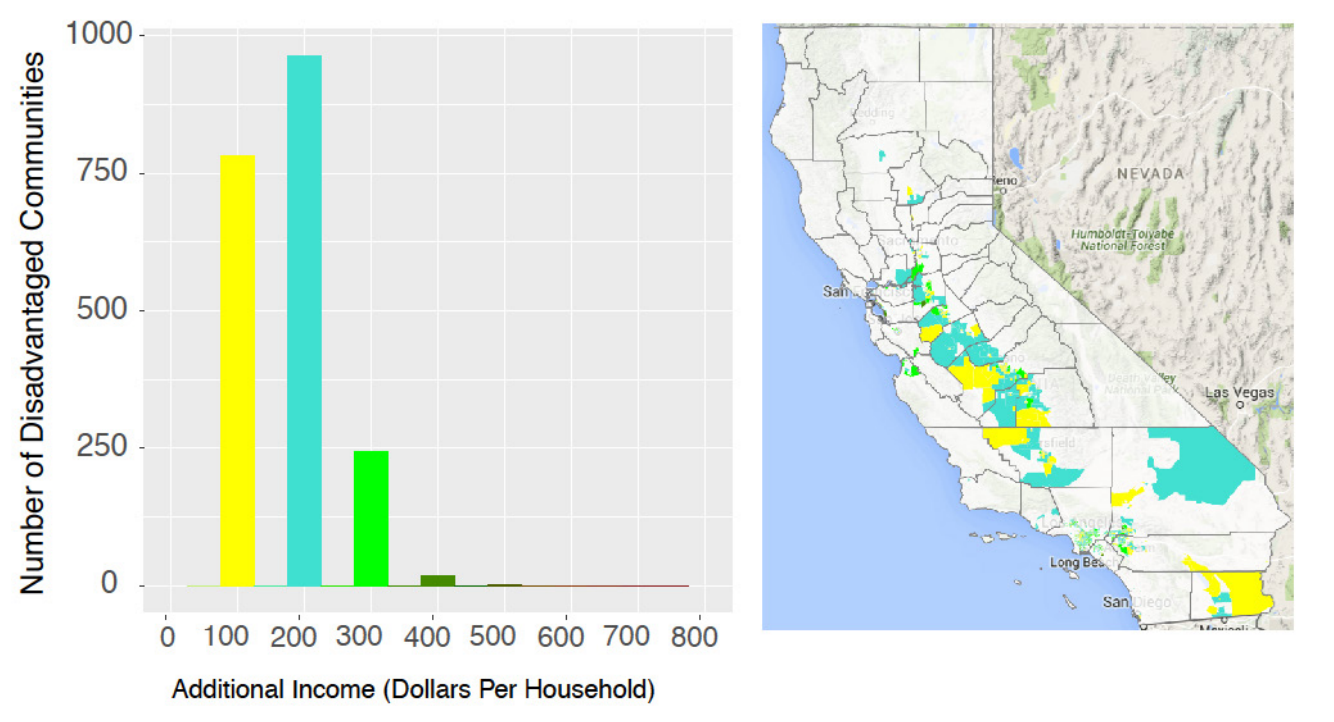
Regionalization adds 9,900 to 19,300 more jobs than current practice in 2030, mainly through ratepayer savings, and both regional scenarios create more jobs in disadvantaged communities than current practice.
Method
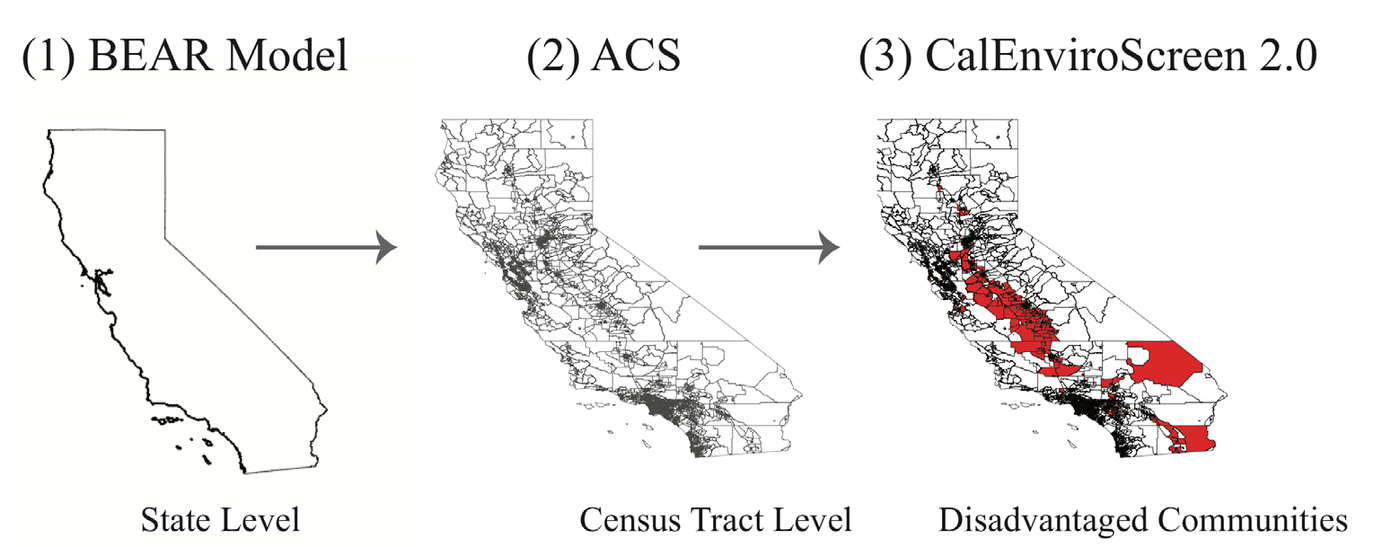
The BEAR dynamic CGE forecasting model of California at 195 sectors, calibrated to 2013 data and a Department of Finance based baseline for 2015 to 2030, with statewide results downscaled to census tracts and to CalEnviroScreen 2.0 disadvantaged communities.
Team
David Roland-Holst, Drew Behnke, Samuel Evans, Cecilia Han Springer and Sam Heft-Neal (Volume VIII), with Aspen Environmental Group (Volume X).
Public record
- SB 350 Study, Volume VIII: Economic Impact Analysis (PDF)California ISO, July 8, 2016
- SB 350 Study, Volume X: Disadvantaged Community Impact Analysis (PDF)California ISO, July 2016
- Summary and all volumes as hosted by BEARbearecon.com
How to cite
Roland-Holst, D., Behnke, D., Evans, S., Han Springer, C., and Heft-Neal, S. (2016). Senate Bill 350 Study, Volume VIII: Economic Impact Analysis. Prepared for the California ISO by Berkeley Economic Advising and Research. July 8, 2016.