
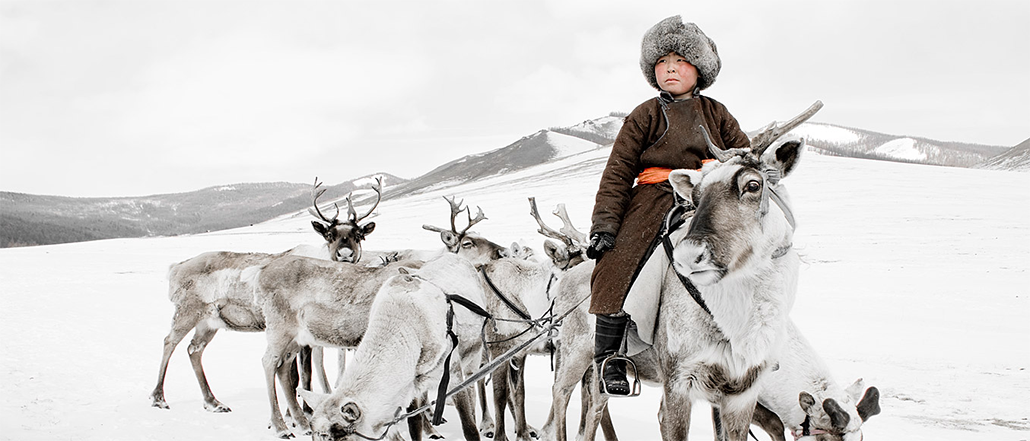
A Social Network for Mongolian Cashmere Producers
Place: Mongolia • Dates: 2024-2026 • Partner: ADB
Smallholder livestock producers in Mongolia play a crucial role in the economy and secure the country’s food supply. However, they often face numerous challenges, such as limited access to markets, inadequate communication channels, and insufficient resources for improving agricultural practices. Among other activities, this project developed a digital intervention to empower smallholder cashmere farmers by providing an online, mobile phone based social network tailored to their needs, enabling better communication, market access, extension services, financial resources, and a wide range of training and capacity development opportunities.
Main Network Features
1 Communication Tools
The network should be designed for full implementation on mobile handsets, presenting a low or no-cost benefit to most rural households in Mongolia. Literacy constraints can be addresses with voice-activated use pathways, but this should be considered as an extension once the norms of general service are established.
2 Market Access
One of the most dramatic benefits of internet networking is reduction of search costs, and this expands the horizon of rural smallholders as well as buyers well beyond they material marketing capacity. To take full advantage of this while mitigating moral hazard and other transactional risks, it is recommended that the network offer listing access for livestock product buyers, processors, and other value chain intermediates, subject to moderation by credible reputation indicators.
3 Extension Services
Like all e-learning, public and private extensions services can be delivered more cost-effectively with digital communication. It is recommended that the proposed network host a virtual extension services clearing house for both member producers and providers, with moderation by credible reputation indicators.
4 Downstream Processing and Marketing Services
Access barriers for remote rural communities run both ways. Providers of appropriate goods and services can reach these consumers and producers with much more diverse and competitive services via the internet, and it is recommended that they be offered access to the network, with moderation by a credible reputational mechanism to reward responsible sellers as well as buyers.
5 Financial Services
Internet platforms like the one proposed for this project are the fastest growing category of individual consumer and enterprise financial services. Combined with e-learning materials that mitigate user risks, they can be a potent catalyst for increased saving and investment.
6 Improved Inputs and Technology
Access to and adoption of improved technology and production inputs is a fundamental challenge for rural smallholders, and one of the primary barriers to higher productivity and improved livelihoods. Digital interventions have revolutionized this kind of access via modern mobile internet literacy and marketing. Offering basic e-learning resources within the FB group will facilitate user access to these resources, including guidance on financial literacy and risk management.
7 Online Knowledge Resources and Learning Services
The internet has revolutionized information access around the world, and it dramatically increases individual access to knowledge resources and learning resources. Although in-person education is a laudable ideal, e-learning offers a much larger array of information and promises much greater diversity of subject matter and consistent quality of instruction than is available in many rural areas.
E-learning resources are available 24/7 to supplement local educational resources and be accessible to learners outside of conventional school age and urban demographics. E-learning also offers education for those who may have no substitute. E-learning can also be focused and paced to individual interests, needs, and availability, making it an essential knowledge access resource for adult learners, women, and others with more limited time and access to classrooms
To test these pilots, BEAR LLC cooperated with Ochir Consulting Ltd of Mongolia to carry out a pilot training program and conduct a baseline survey assessment. During May, 2026, we began in Ulan Bator with project briefings and moved to selected aimags (Bayankhongor and Khövsgöl) for training of 10 household representatives in each of 10 herder locations.
The object of the field mission was to:
- Meet and brief national, provincial, and local officials on the goals and methods of the network, training, and baseline assessment,
- Engage local herders and primary cashmere value chain stakeholders, enroll and train them to use the social networking technology developed for the demonstration project. In two weeks, membership had grown from zero to 190.
Herder Engagement Survey
The pilot included with a direct survey of all participants, yielding the following key findings:
- Herder profile: The sample is almost entirely composed of active herders (99%), with one-third also engaging in animal trading. Cashmere and livestock sales are near-universal income sources. Mean livestock holdings of ~200 animals are consistent with middle-income herder households.
- High financial inclusion: 5% report formal financial accounts, primarily through loan products. The prevalence of term loans and working capital loans suggests active credit use, though the dominance of family expense purposes (54.5%) may indicate loans are being used for consumption smoothing rather than productive investment.
- Strong digital connectivity: 2% own smartphones. Facebook dominates app use (84.5%), and nearly half use banking apps, indicating a mobile-ready population for digital financial and market information services.
- High asset ownership: Motorcycle (83.6%), car (75.5%), and truck (46.4%) ownership rates are high, consistent with the mobility needs of pastoral production systems.
- Pervasive network engagement: All seven network domains show strong engagement across the full sample, with mean scores between 1.31 and 1.90 on the 1–4 scale (1 = highest). This signals that these herder communities are well-networked and actively seek information and support across market, production, financial, and logistical channels. Both herder-only respondents and animal traders score within the strong engagement range, with traders showing slightly deeper engagement—particularly on livestock improvement and financial services networks.
Most Recent Entries
A Social Network for Mongolian Cashmere Producers
Livestock Traceability System for Lao PDR